













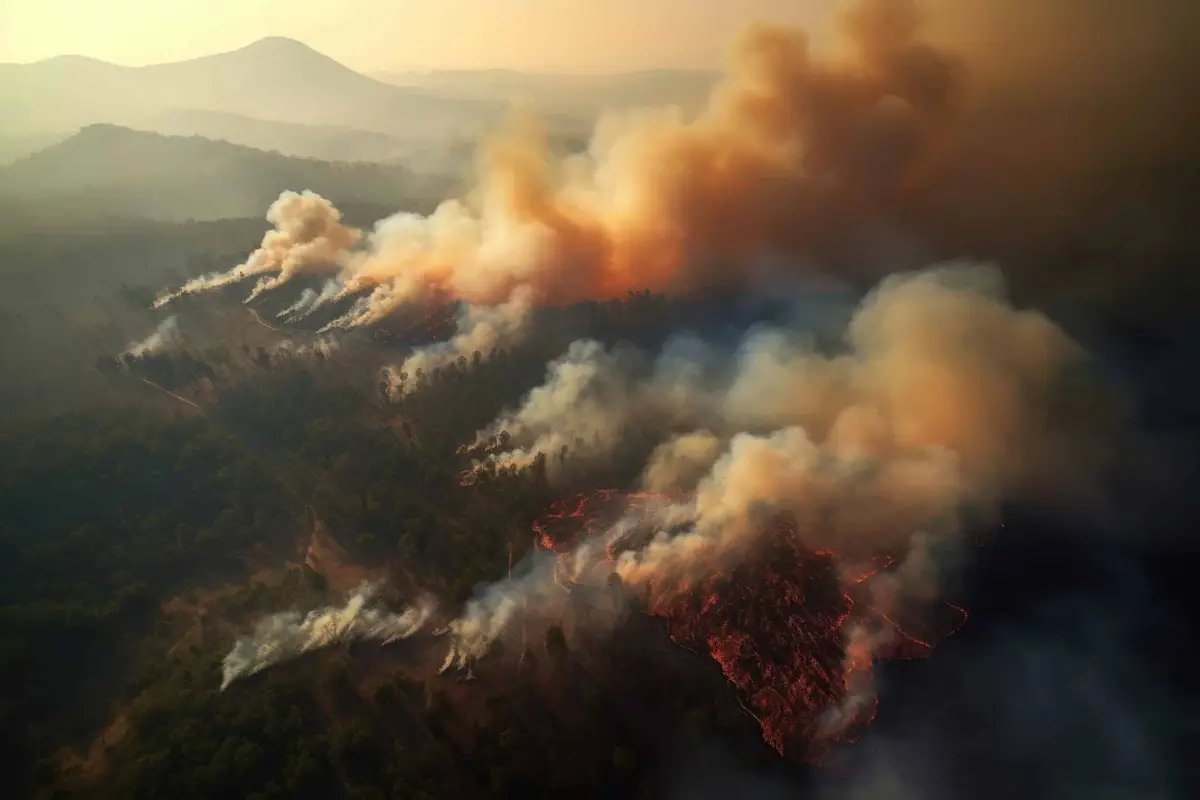

Since the start of the year, Canada has been facing an environmental tragedy on an unprecedented scale. More than 8.4 million hectares have been reduced to ashes in the wildfires that have ravaged the country, according to data published by the Canadian Interagency Forest Fire Centre (CIFFC). This devastated area is equivalent to around 15 per cent of mainland France, and is even larger than the whole of Ireland.
The six-million-hectare mark was passed on 19 June, and just one week later, the seven-million-hectare mark was reached. Despite reinforcements from various countries, including France, the forest fires continue to spread at an alarming rate across Canada.
The situation is all the more worrying given that, of the 622 active fires recorded across the country, no fewer than 326 are considered to be ‘out of control’. This classification highlights the scale of the disaster and the difficulty in bringing these destructive fires under control.
The fires in Canada are still raging. They stretch for 5,000 km! France was shrouded in smoke today. It is a historic disaster!#firesCanada #Canadawildfires pic.twitter.com/8WTtUbZIla
— Cyprustar (@Cyprustar7) 28 June 2023
The year 2023 will go down in North American history, as it was a period marked by historic events. In just six months, Canada broke all records for the area of land burnt in a single year. This reality highlights the gravity of the situation and the urgent need to take action to preserve the country’s forest ecosystems.
For several weeks now, the media have been regularly reporting on the wildfires raging in Canada. The thick plumes of smoke caused by the fires led to two episodes of air pollution in the United States in June, and even darkened the skies over New York. The smoke crossed the Atlantic to reach France last week, though it did not significantly affect air quality across Europe.
In the face of this tragic situation, it is imperative that far-reaching measures be taken to combat these devastating fires. The preservation of Canada’s forests, which are home to a wealth of biodiversity and play a vital role in regulating the climate, is a collective responsibility that the whole world must address.