













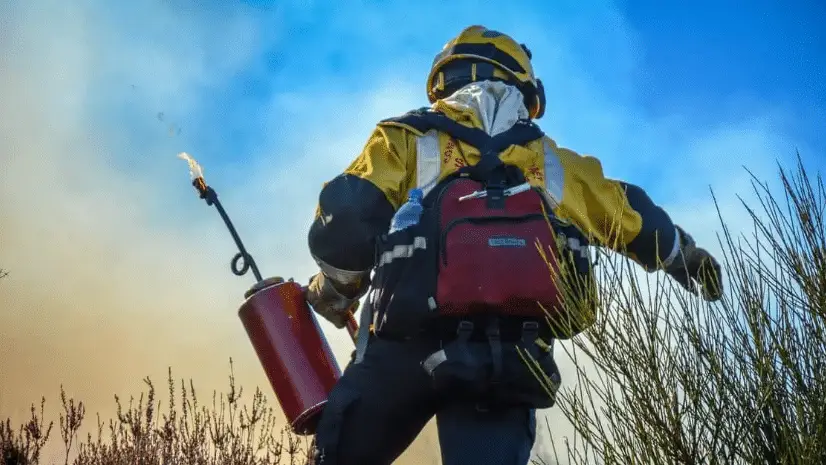

A few kilometres from Neufchâtel-en-Bray (Normandy) The fire brigade prepared for their role in tackling forest and field fires through their training. This training took place throughout last week.
This specialist training course on forest fires involved trainees in realistic simulations. For a week, the site, located near the Varimpré road, was the scene of intense activity by future firefighters learning how to tackle wildfires. Local residents were able to watch the fire engines passing by regularly, a sign of rigorous yet safe training. Scenarios designed to ensure comprehensive preparedness.
The Seine-Maritime Fire and Rescue Service organised this session. In addition, there were 16 trainees under the supervision of eight experienced instructors. The exercises, based on real-life scenarios, included navigating to ‘simulated’ fires. The firefighters were able to use maps and precise coordinates. This process aims to assess and improve the trainees’ ability to organise an effective response to fires.
Training for firefighters to ensure a national response to fires
Furthermore, the aim of the training is to enable trainees to obtain a qualification that allows them to be deployed nationwide. The skills acquired enable these future firefighters to support operations during major disasters. This preparation is essential for an appropriate response to a variety of emergency situations.
Cooperation with the National Forestry Office is essential, particularly when it comes to adapting fire-fighting techniques to the types of trees encountered. This collaboration ensures a more effective response to fires, whether they involve conifers or deciduous trees. Furthermore, trainers incorporate unforeseen factors, such as changes in wind direction, to emphasise the importance of safety for teams in the field.
Finally, the training programme in Neufchâtel-en-Bray also focuses on managing field fires, which are becoming increasingly common in the region. Trainees are thus prepared for a wide range of scenarios, enhancing their versatility and effectiveness as firefighters. This initiative underlines the ongoing commitment to safety and the preparedness of the emergency services in the face of growing natural challenges.