













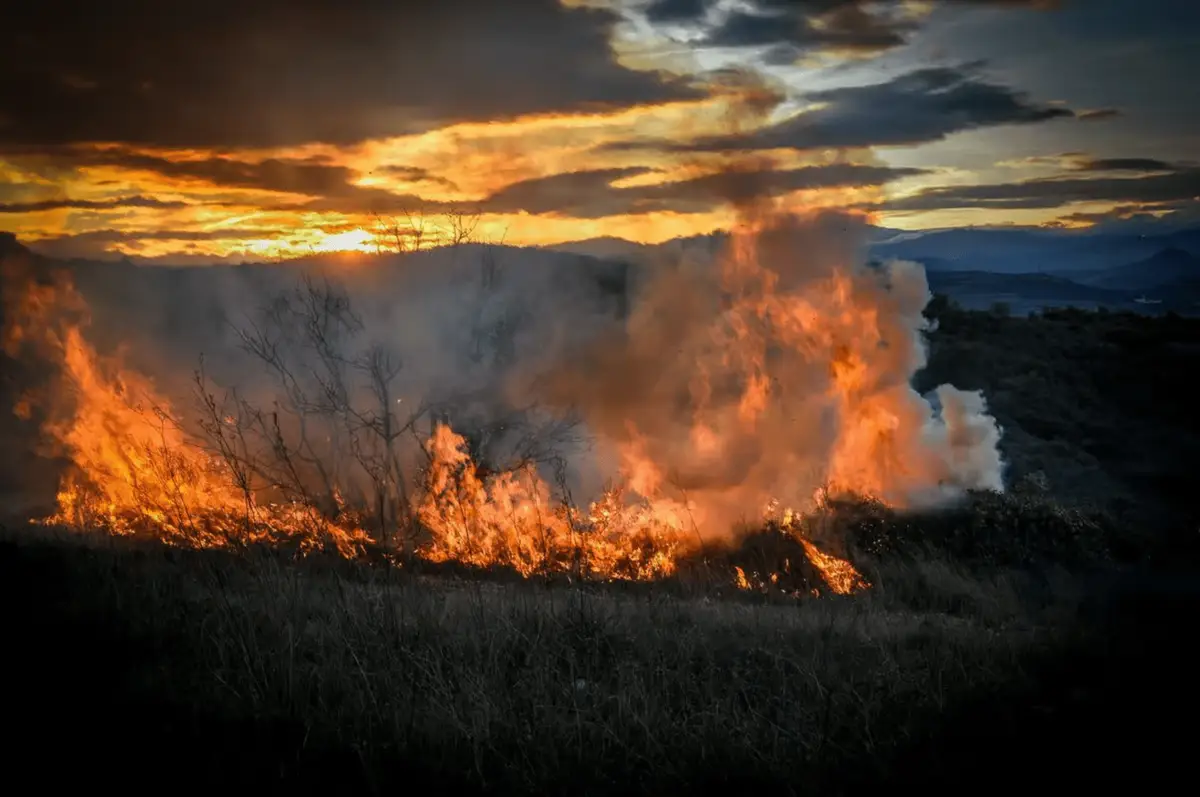

Kairouan in Tunisia has experienced a series ofdevastating fires. These have destroyed a significant part of its natural and agricultural heritage. In just two days, the region has witnessed two major fires, causing considerable damage to olive groves and woodland. The first incident occurred on Monday evening. It destroyed nearly 10 hectares of vegetation, including olive trees and fruit trees. Thanks to the rapid response of the civil protection services, the fire was brought under control around midnight.
A second fire broke out on Tuesday morning, barely 50 metres from the first. This time, it affected around 3 hectares of woodland near a river, close to a farm. The recurrence of these fires in such a short space of time has highlighted the region’s vulnerability to forest fires and prompted an emergency mobilisation of civil protection units, under the leadership of Hamdi Loussif.
An investigation is under way to establish the causes
The authorities quickly launched an investigation to determine the causes of these disasters. The aim is to understand how the fires started, to identify any shortcomings in prevention measures, and to strengthen measures to prevent such events from happening again. The proximity of the two fires suggests a possible link between them, which adds a layer of complexity to the investigation.
These fires have had a profound impact on the community and the environment in Kairouan. The loss of 13 hectares of olive groves and woodland is a heavy blow for the local economy and for the region’s biodiversity. Olive trees are at the heart of Kairouan’s agriculture, playing a crucial role in both the economy and cultural heritage. In addition to economic losses, the fires threaten biodiversity and ecosystems, highlighting the fragility of these landscapes in the face of natural disasters.